Choosing the right karaoke bar accessories might not seem like a priority when setting up a karaoke night, but the difference between a smooth evening and a chaotic one often comes down to a handful of relatively small decisions. This guide is written for bars, pubs and venues that either already run karaoke nights or are exploring whether to add them to their entertainment lineup.
Running karaoke in a busy public venue is a different challenge to a private party. Equipment gets heavy use, customers have usually had a drink or two, and a lot of different people pass through the same stage in a single night. The right bar karaoke equipment helps you manage hygiene concerns, protect your investment, keep the singer queue moving and create an atmosphere the whole room can enjoy.
It’s often the smaller, less obvious accessories that solve the most persistent problems — and speed up singer changeovers more than anything flashy. This guide covers the most useful karaoke accessories for bars and venues, with practical notes on what each one actually solves. Where relevant, accessories are grouped by priority: essential, recommended or nice-to-have.
Why the right karaoke bar accessories make a night run better
A busy karaoke night in a public bar puts real pressure on equipment, staff and the overall flow of the event. The operational problems that arise are fairly predictable — but they can be mitigated with the right setup.
- Slow singer changeovers disrupt momentum. When the next performer isn’t ready and the mic has wandered off, the room loses energy fast. Mic stands, request kiosks and a clear queue system keep things moving.
- Shared microphones raise hygiene concerns. Karaoke mics pass between a large number of people in a single evening. Disposable covers and regular sanitising give customers confidence without slowing the night down.
- Alcohol increases the risk of equipment damage. Mics get dropped, rolled off tables and occasionally carried into the crowd. Anti-roll rings, durable wireless systems and sensible stage layouts all help.
- Staff and DJs get constantly interrupted. Self-service request stations significantly reduce the number of people approaching the booth, freeing whoever is running the night to focus on the karaoke itself.
- The audience disengages if they can only watch. Lighting, haze and a dedicated audience lyric screen turn a solo performance into something the whole room participates in.
Keeping singers moving is the single most important factor in a successful night — and most of the accessories covered below are there, in one way or another, to help with exactly that.
Disposable microphone covers: hygiene without friction
Disposable microphone covers are single-use foam or plastic sleeves that slip over the grille of a microphone, creating a lightweight barrier between the mic and the singer’s mouth. They’re inexpensive, quick to fit and easy to dispose of after use.
They’re not something every customer will ask for. During the COVID reopening period, they became almost essential — customers were understandably cautious about sharing microphones, and having covers available made a real difference to how comfortable people felt stepping up to sing. That level of demand has settled considerably since then, but you’ll still occasionally get someone asking whether the mic has been sanitised or expressing reluctance to share one. Having a small supply on hand means you can offer a simple, reassuring option without making it compulsory for everyone.
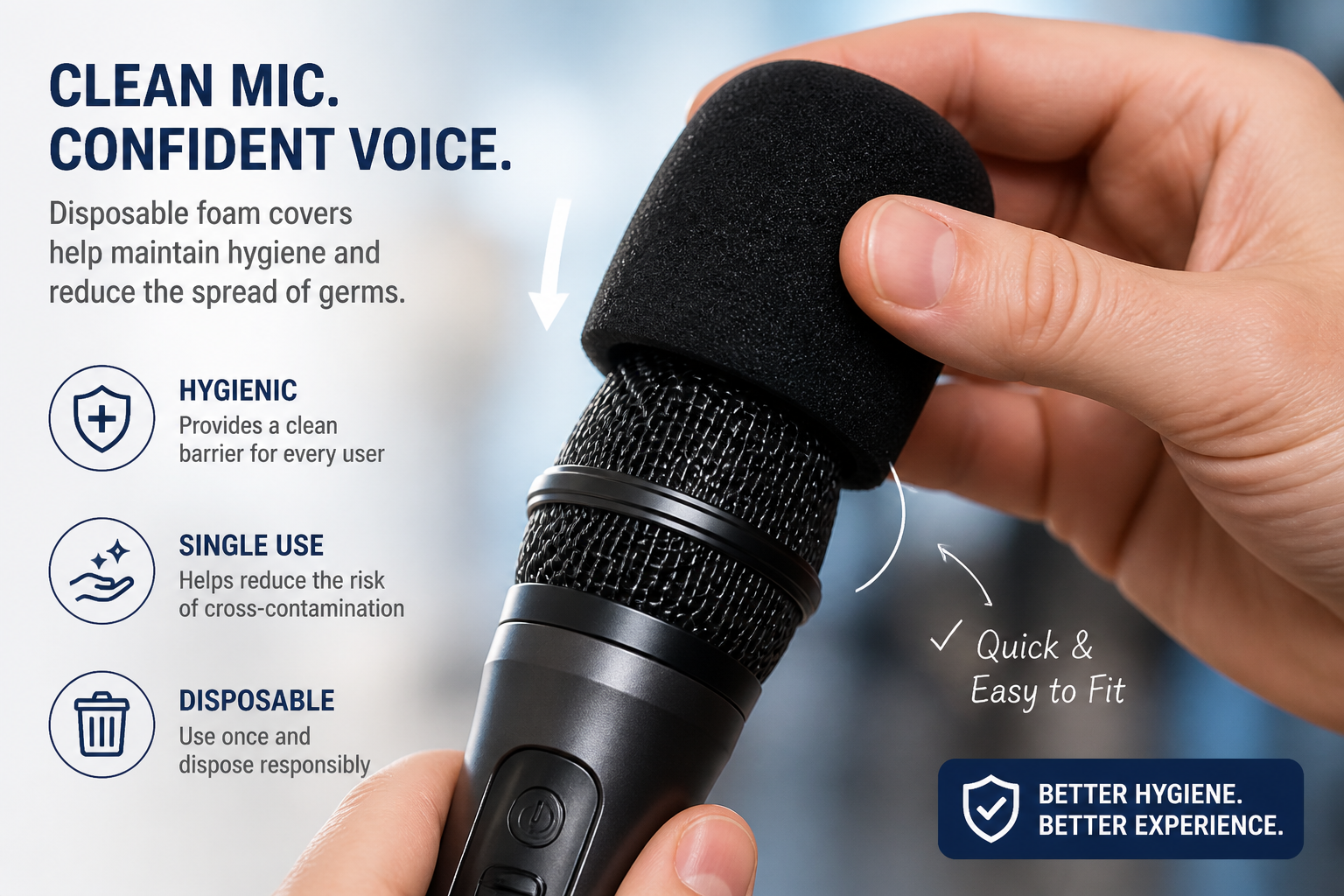
A simple operational approach works well:
- Store covers near the stage so they’re easy to access without interrupting the flow of the night.
- Present them as optional — offer them to customers who ask, rather than issuing them by default.
- Dispose of used covers immediately into a nearby bin to keep the stage area tidy.
Disposable covers are low-cost and low-effort. They’re worth keeping in stock simply because you’ll occasionally need them.
Wireless microphones: freedom to perform — and the risks to manage
Wireless microphones are one of the most performer-friendly karaoke bar accessories you can invest in. Without a cable tethering them to a stand or PA system, singers can move freely around the stage, turn to face the crowd and generally put on a more engaging performance. The energy difference is noticeable, and audience interaction tends to increase when singers aren’t anchored to one spot.

The downside is straightforward: wireless microphones in a busy bar are at genuine risk of going missing, being dropped or disappearing into the crowd. Once customers have had a few drinks, mics have a habit of travelling. The result is a delay at changeover while staff track down the mic — exactly the kind of disruption that slows a night down.
Practical ways to manage wireless mics
- Label your mics clearly so staff can spot them quickly if they’ve been left on a table or taken to the bar.
- Keep at least one spare so a missing mic doesn’t bring the night to a halt.
- Use a mic stand as a designated home — and in high-risk venues, consider securing the mic to the stand with a zip tie so it can’t be removed at all.
- Brief bar staff so they know to redirect any microphone that wanders behind the bar.
For venues that want pro-grade wireless systems without a large upfront cost, premium karaoke machine hire is worth exploring as an alternative to buying outright.
Microphone anti-roll rings: small, cheap and effective
Microphone anti-roll rings are small rubber or silicone rings that fit around the barrel of a handheld mic, stopping it from rolling when placed on a flat surface. They cost very little and take seconds to fit.
Singers will put microphones down on tables, counters and speaker tops without thinking twice. Without protection, a gentle nudge is all it takes for the mic to roll off and land grille-first on the floor. Over time, those drops add up: dented grilles, damaged capsules and mics that need replacing sooner than they should.
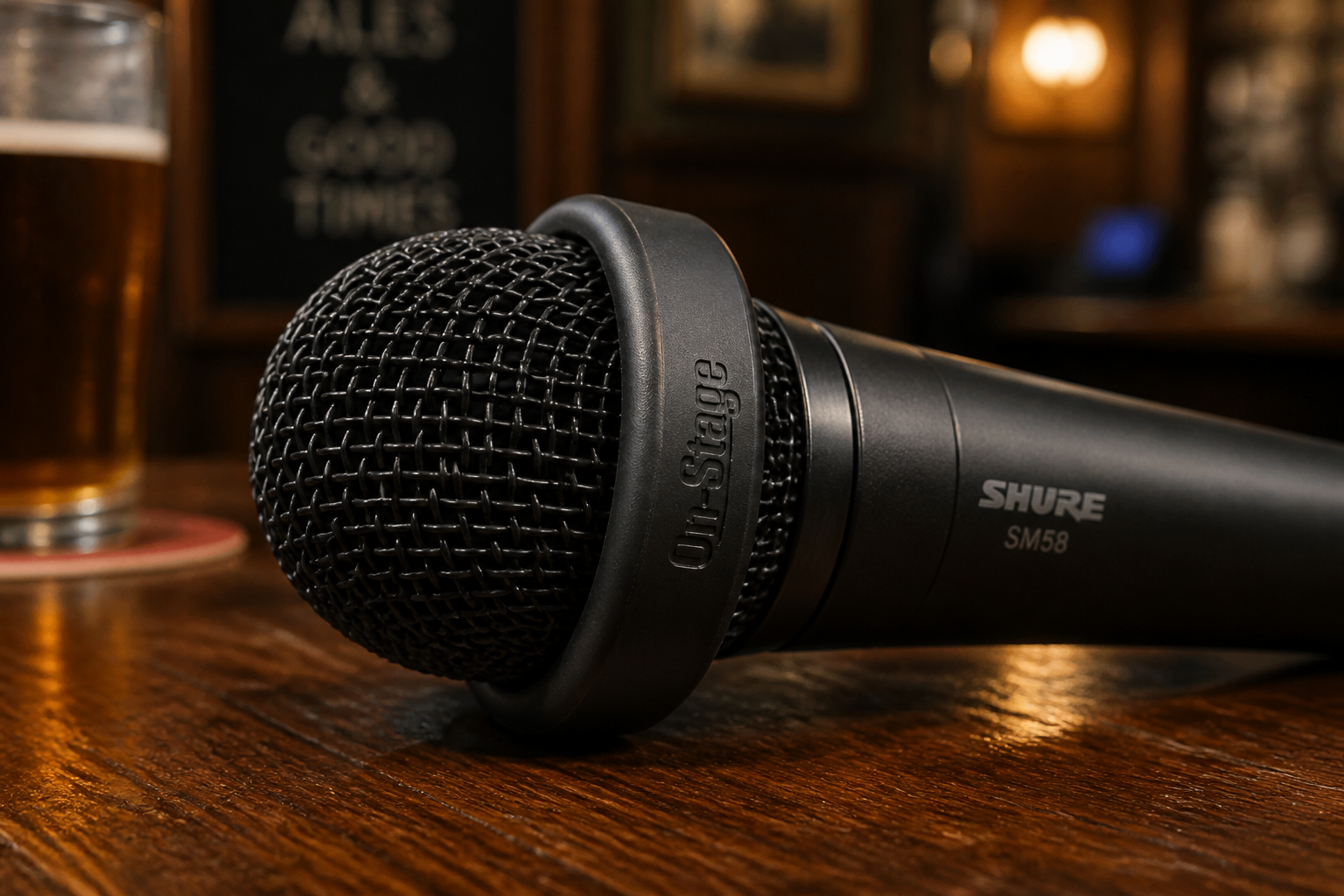
Keep one ring per microphone as standard kit. It’s one of the lowest-cost ways to protect your equipment and extend its working life.
Microphone stands: control the stage or hamper the performance?
Microphone stands give the mic a home. In a busy pub with a high turnover of singers, that matters more than it might seem.
The case for using stands: A stand defines the performance area visually, gives each new singer a clear place to step up to, and means the mic is always in the same spot at the start of every changeover. In busy bar environments, attaching the mic to the stand with a zip tie is a genuinely effective way to stop it disappearing into the crowd.
The case against: Stands can feel restrictive for confident performers who want to move around the stage. In a more casual setting, they can also look clinical and take up space that would be better left open.
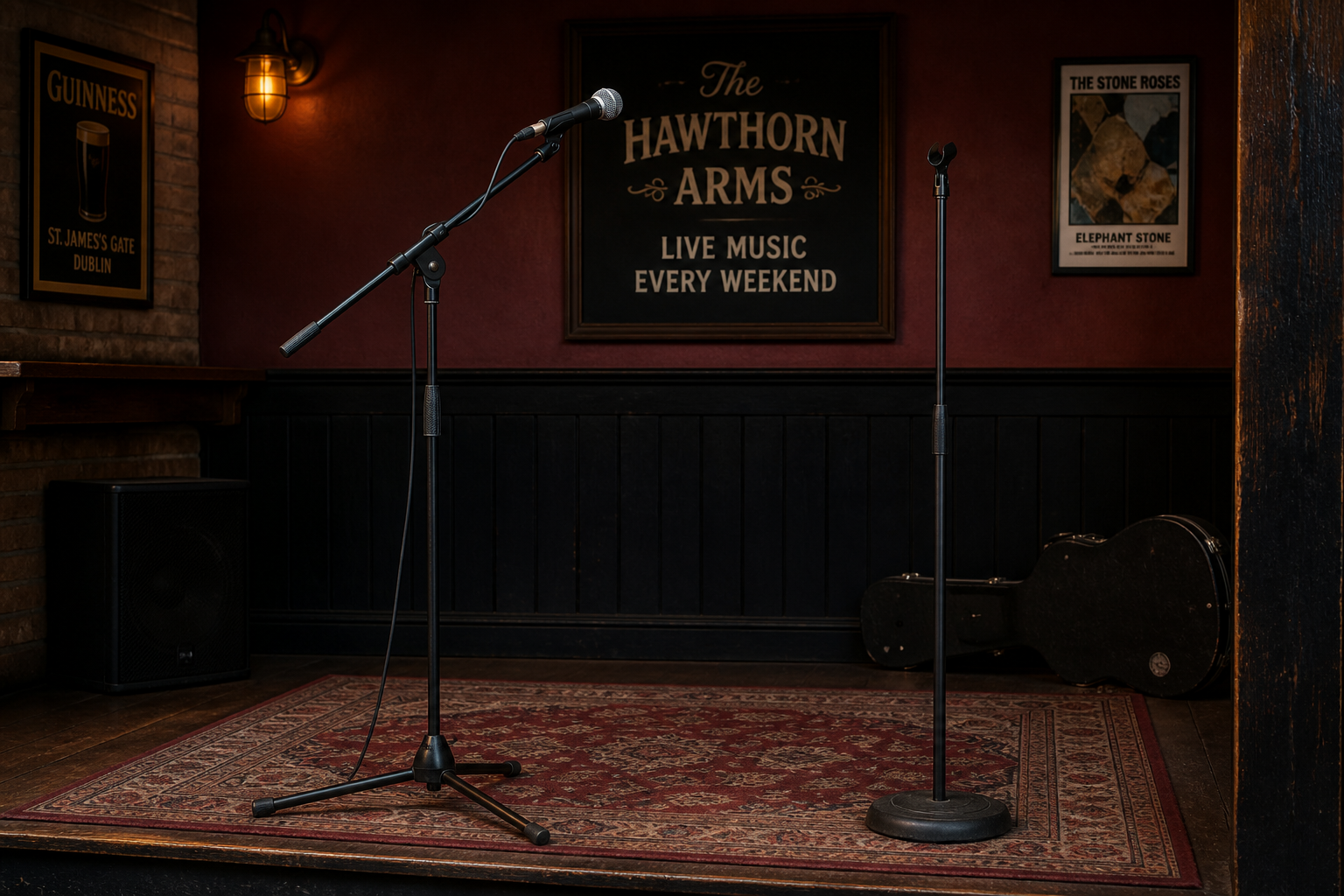
A practical approach is to match the stand type to the setting:
- Busy pub night with a long queue: Use a straight stand with the mic secured. Prioritise stage management and changeover speed over performer freedom.
- Casual or lower-key event: Leave the stand in place as a home base but don’t fix the mic to it — let performers choose whether to use it.
- Low-profile setups: A short desktop or table stand works well when floor space is tight.
Boom stands are useful if you need to angle the mic away from monitors to reduce feedback, but a standard straight stand is usually sufficient for most pub karaoke setups.
Karaoke request kiosks: reduce interruptions and let customers queue themselves
A self-service karaoke request system does one thing particularly well: it stops customers from approaching the DJ or bar staff every five minutes to ask when their song is coming up. In a busy venue, those interruptions accumulate quickly and break the flow of the night. A dedicated request station — whether a tablet kiosk, a QR code on the wall or a browser-based remote — puts customers in control of their own queue and keeps the person running the night focused on the performance.
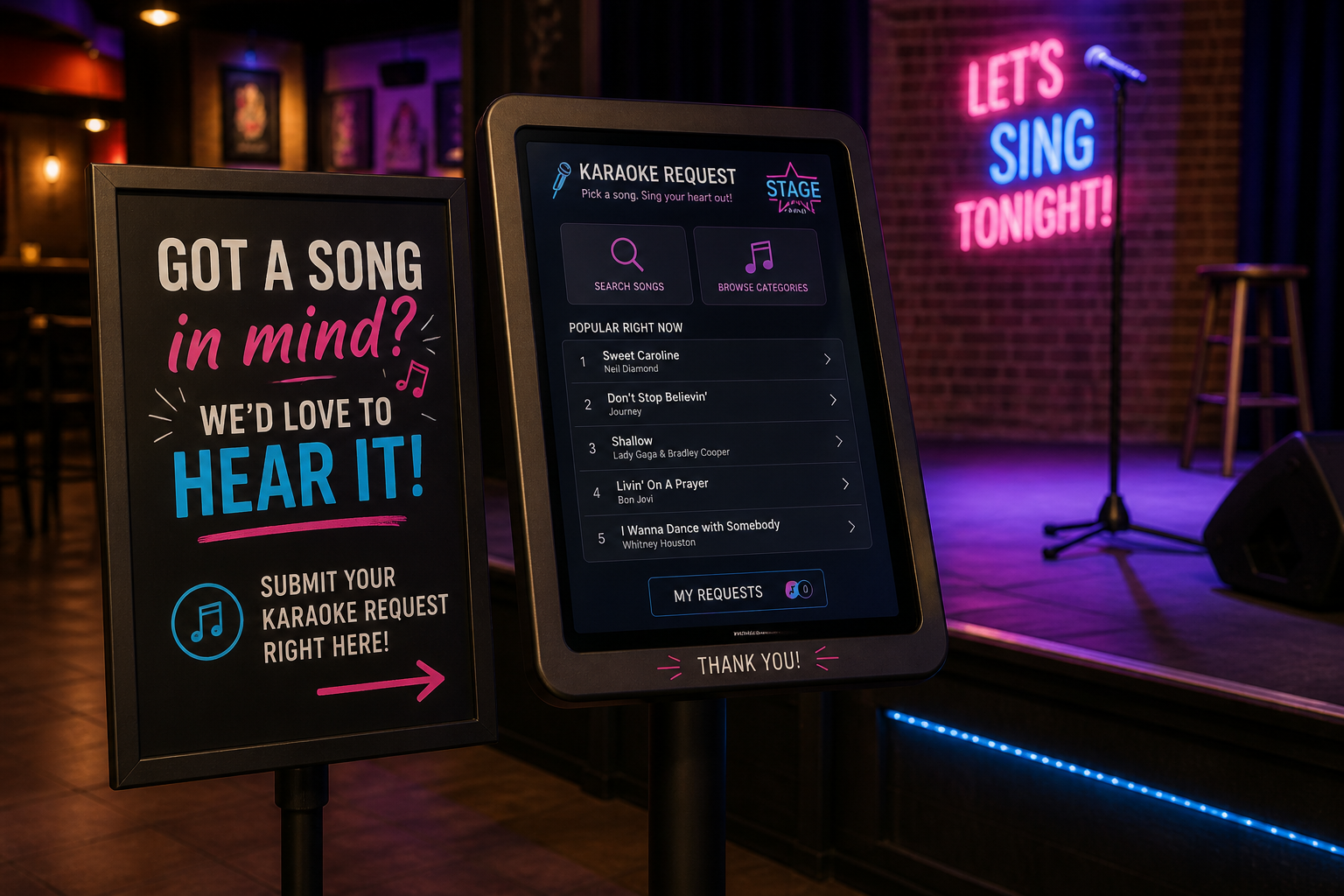
The software you use will largely determine which options are available. Singa includes built-in kiosk-style functionality, while KaraFun handles requesting through a browser interface, meaning customers can submit songs from their own phones without needing a dedicated device at all. A QR code displayed near the stage can point directly to the request interface, removing most of the hardware requirement entirely.
If you do want a physical kiosk, a tablet locked down using built-in guided access settings works well. Place it near the stage or bar with clear signage explaining how to use it. A wall-mounted touchscreen is a more permanent solution for venues that run karaoke regularly.
A few operational points to keep in mind
- Network reliability matters. Browser-based request systems will fail if the Wi-Fi drops. Have a fallback process ready.
- Duplicate requests happen. Make sure whoever is managing the queue has a quick way to remove or reorder songs.
- Keep a staff override method. Self-service systems are efficient, but the host or DJ needs to retain control of the running order.
A dedicated request station dramatically reduces interruptions and, combined with reliable karaoke machine hire, gives you a setup that can manage a busy night with minimal staff involvement.
Karaoke props: boost engagement but expect losses
Karaoke props are worth having, but go in with realistic expectations. Inflatable guitars, novelty glasses, feather boas and oversized hats create entertaining moments on stage and generate the kind of social media photos that spread a venue’s reputation organically. They’re genuinely good for atmosphere.
The practical reality is that props move around the room, get broken and occasionally disappear. In a public bar, that’s just the nature of it.
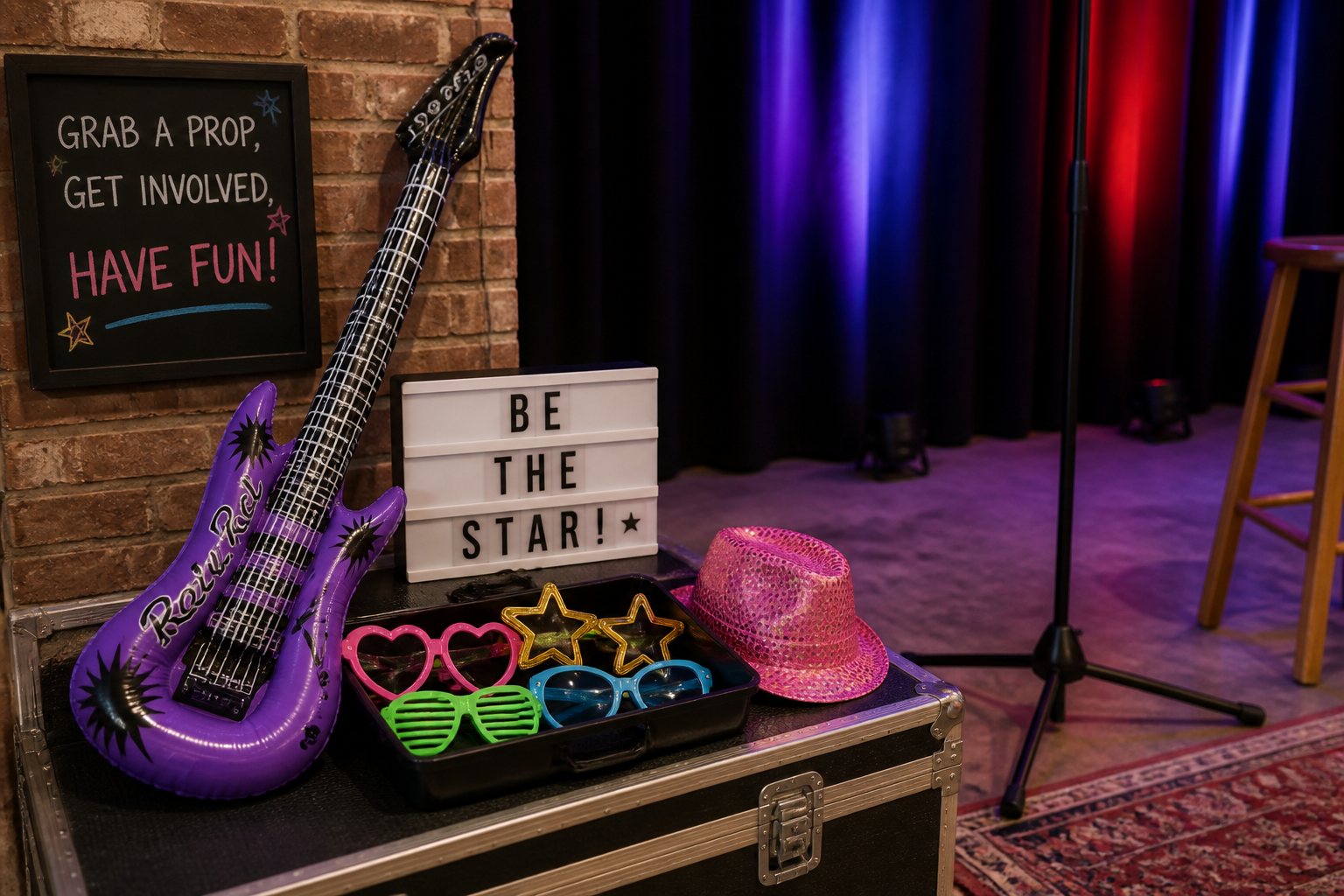
The sensible approach is to keep a small selection of inexpensive, durable props and budget for regular replacements. Put only a few items out at a time and keep spares out of sight. The entertainment value more than justifies the modest outlay.
A dedicated drinks table: small detail, big impact
A stage drinks table is one of those additions that seems obvious once you’ve seen the alternative. Without somewhere safe to set a drink down, singers hold their glass while performing, rest it on the floor where it gets kicked over, or balance it on equipment. A dedicated drinks table prevents spilled drinks and sticky, wet mics — both of which cause real problems over time.

The setup doesn’t need to be elaborate. A small side table with a non-slip mat and a few coasters is sufficient. Place it within easy reach of the performer but clear of main foot traffic routes. A shallow spill tray underneath is a sensible extra in venues where drinks flow freely. It keeps liquids away from microphones and cables, reduces interruptions for staff and means singers can actually focus on their performance rather than their pint.
Multiple lyric screens: keep the singer and audience on the same page
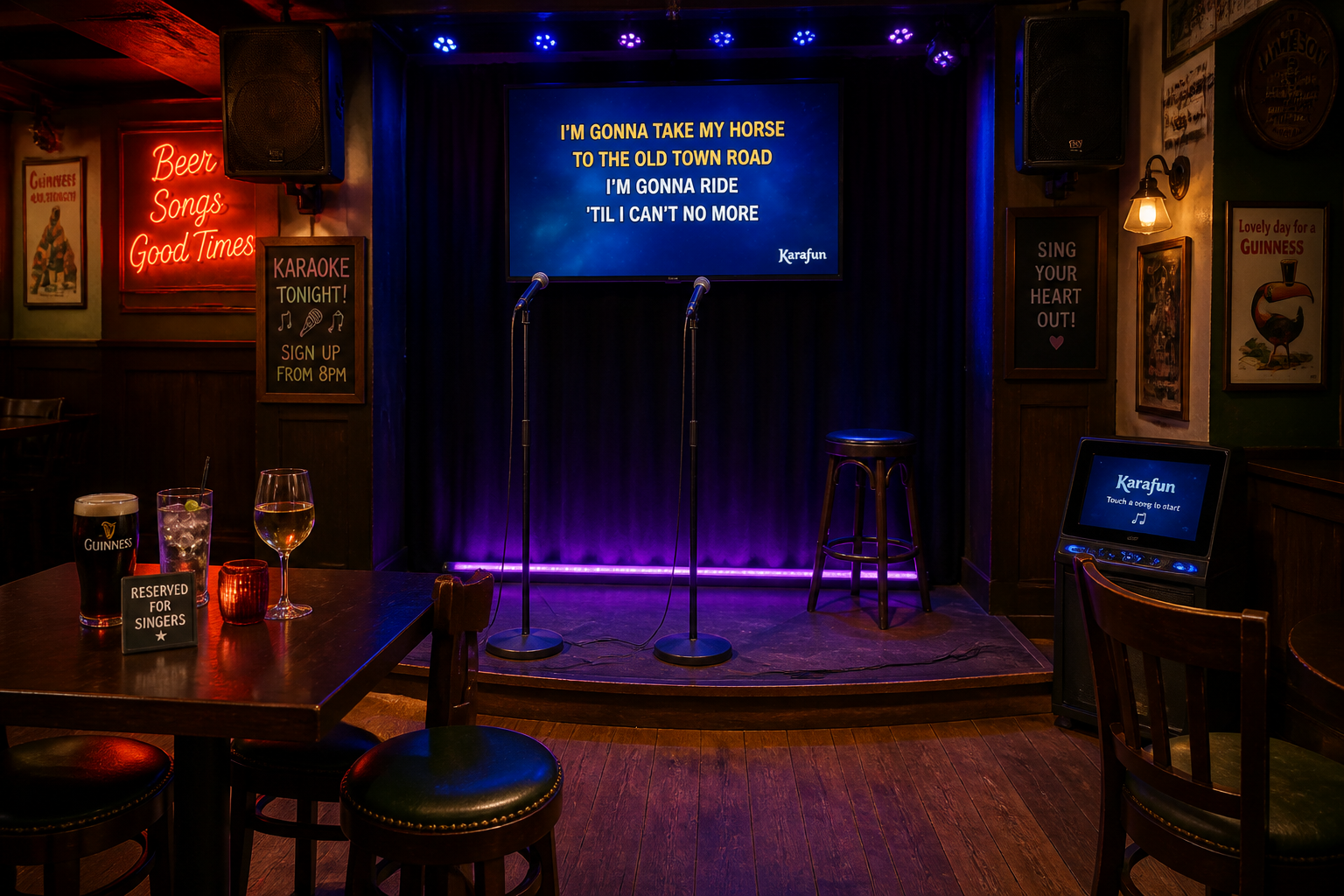
A single screen works, but a dual-monitor setup changes the dynamic of the whole room. A singer monitor alongside a larger audience-facing screen transforms karaoke from a solo performance into a group experience — the crowd can follow the lyrics, join in on choruses and stay engaged even when they’re not holding the mic.
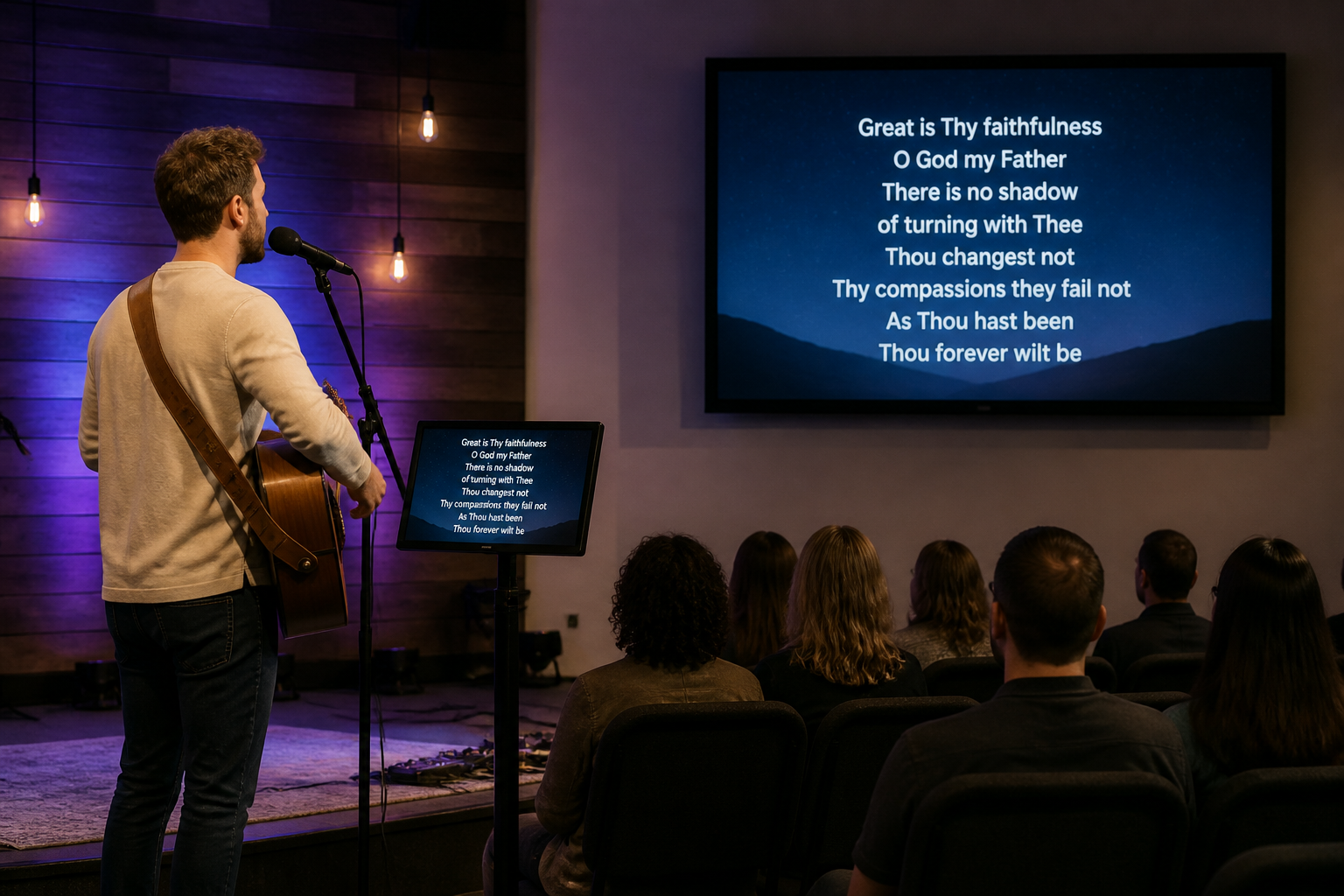
The singer monitor sits at the front of the stage, angled upward toward the performer. This lets them read lyrics comfortably while facing the audience, rather than turning their back to check a rear-mounted screen. The audience screen should be wall-mounted or on a stand at a height visible from all seating areas. Use a large, high-contrast font — at viewing distances of six to ten metres, small text becomes unreadable quickly.
For routing, most karaoke systems support a duplicate video output via HDMI splitter or dual display settings. If you’re using a software-based system, check whether it supports multiple display outputs natively before purchasing additional hardware. Keep latency minimal — any noticeable delay between audio and lyrics on screen makes the system difficult to use.
Look for karaoke machines that support multiple screens to avoid retrofitting display outputs later. It’s a straightforward upgrade that consistently improves audience participation.
Lighting and effects: affordable upgrades that transform atmosphere
For the budget, LED wash lights give the best return. A coloured LED wash across the stage makes any performer look the part, and models with auto-sound triggering require no technical knowledge to operate. They’re relatively inexpensive, durable when kept away from the bar area, and can run all night without staff intervention.

A stage haze machine takes karaoke lighting further. Even a small amount of haze makes light beams visible, turning a basic coloured wash into something that looks and feels closer to a live concert. The effect on the crowd is immediate — performances feel more cinematic and singers who might otherwise be self-conscious tend to loosen up under good lighting.
Using haze machines safely
The key word with haze is restraint. Set the machine to low output, use short bursts rather than continuous running, and make sure the venue has adequate ventilation. Too much haze in a confined space can trigger smoke detectors — check your fire detection system and fire risk assessment before using one, and consult your local fire authority if you’re unsure. In the UK, venue operators have a duty under fire safety legislation to ensure that any activity affecting fire detection systems is properly managed. Brief staff on how to adjust output if the room fills up too quickly.
For placement, mount fixtures above and slightly in front of the performance area. Keep all electrical equipment secured away from drink spill zones, and opt for commercial-grade fittings where karaoke runs multiple nights per week.
Operational tips for busy karaoke nights
Good bar karaoke operations come down to predictable procedures and having the right things in the right place before the night starts. Use this as a starting point for your karaoke duty checklist.
Queue management
- Use a digital request kiosk, QR code or paper sign-up sheet — whichever your system supports
- Assign one named host or DJ to control the running order and manage duplicates
- Display the queue visibly so singers can see when their turn is coming
Hygiene
- Wipe microphones with an antibacterial cloth between each user
- Keep disposable mic covers available on request
- Place a hand sanitiser station near the stage
Staff roles
- Enable self-service requesting where possible so bar staff are not the bottleneck
- One person should own the queue; avoid shared responsibility with no clear lead
Backup and redundancy
- Keep at least one spare microphone charged and ready
- Store a replacement XLR cable and power cable nearby
- Have a short troubleshooting checklist for common issues: no sound, feedback, mic dropout
If you need help planning the setup for your venue, contact The Karaoke Company for advice on equipment and operational configuration.
Quick purchase checklist: essential, recommended and nice-to-have
Use this karaoke equipment checklist to prioritise spending. Items that reduce downtime should always come before decorative upgrades.
Essential (buy before opening night)
- Reliable wired or wireless microphones, plus at least one spare
- Singer monitor and audience-facing lyric screen
- Spare XLR and power cables
- Basic LED stage lighting
- Dedicated drinks table with non-slip mat
Recommended (add early for smoother operations)
- Microphone stands
- Anti-roll mic rings
- Request kiosk or tablet
- Disposable mic covers and sanitiser station
- Low-output haze machine
Nice-to-have (add once the basics are solid)
- Novelty props
- Additional decorative lighting
- Premium wireless microphone systems
- Branded mic covers
Not sure whether to buy or hire? Explore karaoke machine hire or premium hire for higher-spec karaoke bar accessories including pro-grade wireless and lighting packages.
The right karaoke bar accessories — spares, stands, hygiene options, request management and selective atmosphere upgrades — make a measurable difference to how smoothly a night runs. Anything that cuts delays is worth the investment. Get in touch with The Karaoke Company for tailored advice on equipment, hire options and setting up your venue for a consistently great night.